
Why It Works: The Thoughtful Details Behind GO Logic Panels
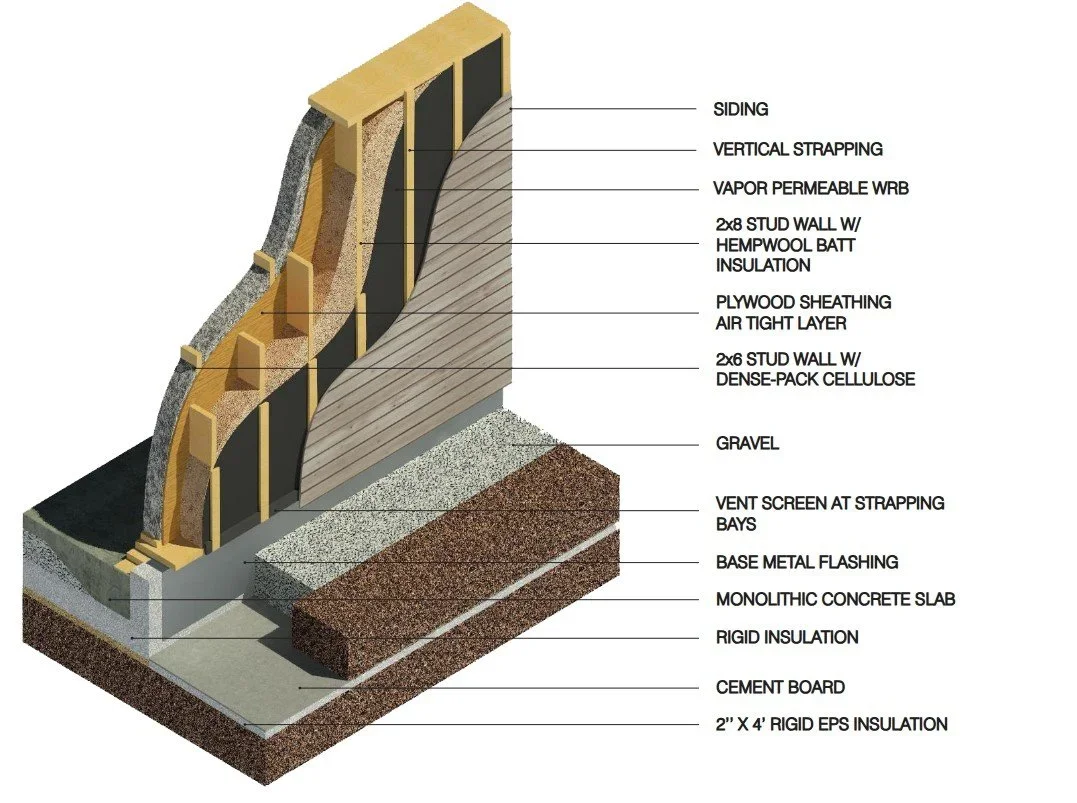
Go Logic: wall assembly layers
Explore the subtle but powerful design decisions that make GO Logic panels high-performing, resilient, and ready for Passive House-level results—from shop-installed windows to air-tight corner assemblies.
Performance, Layer by Layer
Every detail in a GO Logic panel is the result of years of iteration, field testing, and performance-driven design. In this post, we’re opening the wall and sharing some of the less obvious, but deeply considered choices that make our enclosures perform the way they do. If you’ve ever wondered why our builds are so quiet, so comfortable, so consistent, this is where it starts.
Precision-Installed Windows, Placed for Performance
High-performance windows only deliver their full value when installed properly.
Product performance and installation work together—each only as effective as the other.
At GO Logic, we install windows in-shop, flat on the panel table. That approach ensures consistent sealing, accurate placement, and zero weather variables. Every unit is air-sealed, water-sealed, and pre-trimmed before it reaches the site.
We also center each window within the wall assembly rather than placing it flush to the exterior. That subtle recess reduces wind washing, limits thermal bridging, adds passive shading, and matches our refined aesthetic. It’s a quiet nod to European mass-wall construction, reimagined in a panelized form.
Exterior Corners That Lock in Airtightness
Corners can be one of the trickiest parts of a double-wall assembly. Our solution: run the gable-end walls long, so they cap the adjacent walls. That simplifies framing, ensures continuity, and sets up a clean air-sealing strategy.
Each joint is gasketed at the framing layer, with the sheathing acting as the air barrier. The exterior weather barrier is then sealed at the connection for a complete assembly.
Every Layer, Built Right the First Time
Stacking six or seven layers on-site is labor-intensive and full of risk. So we do it in the shop. Air barrier, water barrier, insulation, and windows are all shop-installed. That means better ergonomics, better sequencing, and fewer trips up the ladder.
It also leads to faster dry-in. As soon as panels go up, the shell is well on its way to being trade-ready. Rough-in starts sooner, with less exposure and greater control.
Insulation Backed by Testing and Time
We’ve tested everything: foam, mineral wool, rigid wood fiber. Today, our hybrid wall pairs cellulose inside with hemp batts outside. It’s low carbon, easy to work with, and built to last.
This isn’t guesswork. It’s the result of years of field testing and modeling. And it reflects our long-term commitment to healthier materials and resilient assemblies.
Hidden Air Barrier = Long-Term Protection
We place the air barrier mid-wall, where it’s protected from trades during construction and safe from punctures over the life of the building. That internal location makes execution more reliable—especially for GCs who may not have access to crews with deep building science experience or who don’t want to reinvent the wheel to get a high-performance result.
In GO Logic’s panels, the air barrier does triple duty: it’s also the structural sheathing and a key element in vapor control. Positioned at the center of the wall and wrapped in continuous insulation on both sides, it stays warm, dry, and stable year-round. The result: no condensation risk, no hidden moisture, and no compromise to the long-term health of the building—or the people inside.
Why These Details Matter
Precision and speed are just the surface benefits. What really sets GO Logic panels apart is how each element reinforces the next:
Smart sequencing
Clean installs
Safer working conditions
Materials chosen for performance and the planet
None of this happens by accident. Every detail is labored over, tested, debated, and refined. Again and again. That’s the quiet rigor behind a GO Logic panel.
That’s why it works.